Far from Home, Close to the Table: How Indian Families Shaped West Virginia's Food Story
There's a moment that many Indian immigrants describe in almost the exact same way, no matter where in the country they settled. It happens in the kitchen, usually late at night, after a long day of navigating a new country, a new job, a new language. You open a jar of whole cumin seeds and toast them in a dry pan, and for just a second, you're not in West Virginia or Ohio or Texas. You're home.
That's the power of food. It doesn't just nourish — it remembers.
For the Indian families who have put down roots in West Virginia over the past few decades, cooking has served as an anchor. And in doing so, they've quietly, steadily transformed the culinary landscape of a state that most people wouldn't associate with tandoori chicken or tamarind chutney. This is a story worth telling.
Why West Virginia, of All Places?
It's a fair question, and the answer is less complicated than you might think. West Virginia's universities — WVU in Morgantown, Marshall in Huntington, WV Tech, and others — have long attracted international students and faculty from around the world, including a significant number from India. Graduate programs in engineering, medicine, business, and the sciences drew ambitious young people who came for education and, in many cases, stayed for life.
They built careers. They bought homes. They raised children. They started businesses. And through all of it, they cooked.
The first generation of Indian families in WV often had to get creative. Specialty ingredients weren't easy to find. There were no Indian grocery stores in many parts of the state. Spices were ordered by mail or brought back in suitcases after trips to visit family. Recipes were phoned in from mothers and grandmothers thousands of miles away, scrawled on notepads, memorized through repetition.
Those early kitchens were acts of devotion.
Food as Memory, Food as Identity
For any immigrant community, food is one of the last things to change. Language adapts. Clothing shifts. Habits bend to fit a new environment. But the flavors of home — those hold on.
Indian cuisine is particularly resistant to dilution because it's so deeply tied to ritual, religion, family structure, and regional identity. A family from Gujarat doesn't cook the same food as a family from Tamil Nadu. A household that observes specific religious dietary practices cooks differently from a neighbor who doesn't. The diversity within Indian food culture is staggering, and it's all of it — every regional variation, every family recipe, every grandmother's secret ratio of spices — that came to West Virginia in those suitcases.
Children of Indian immigrants in WV often describe growing up with a kind of double food identity. At school, it was pizza and mac and cheese. At home, it was rice and dal every night, with a rotating cast of curries, chutneys, and sweets tied to festivals and seasons. Some of those kids grew up a little embarrassed by the smells that clung to their clothes. Many of them are now the loudest advocates for authentic Indian food — the ones dragging their West Virginian friends to restaurants and insisting they order the lamb biryani.
Building Community, One Meal at a Time
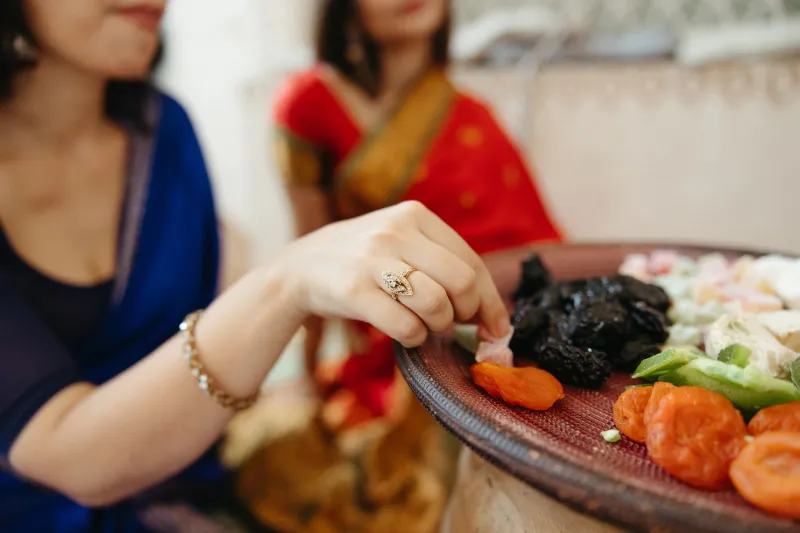
Food has always been how Indian families in WV have found each other and built community. Potlucks and festivals became lifelines — gatherings where you could speak your language, hear familiar music, and eat food that tasted like the place you came from.
Diwali celebrations, Eid dinners, Holi parties — these events, often organized by Indian student associations or cultural organizations, became some of the most vibrant community gatherings in their respective towns. And they were rarely closed off to outsiders. West Virginians who stumbled into these events often came away with something they hadn't expected: a new understanding of a culture they'd only seen from the outside, and a serious craving for whatever that incredible food was.
That open-door spirit is deeply Indian. Hospitality is not optional in Indian culture — it's a moral value, almost a reflex. When you come to an Indian home, you eat. There is no question about it. You eat, and you eat well, and you leave with leftovers.
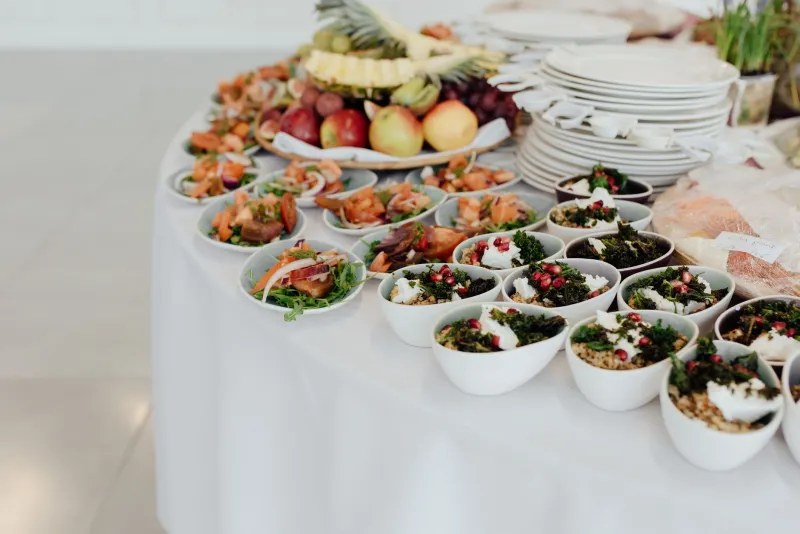
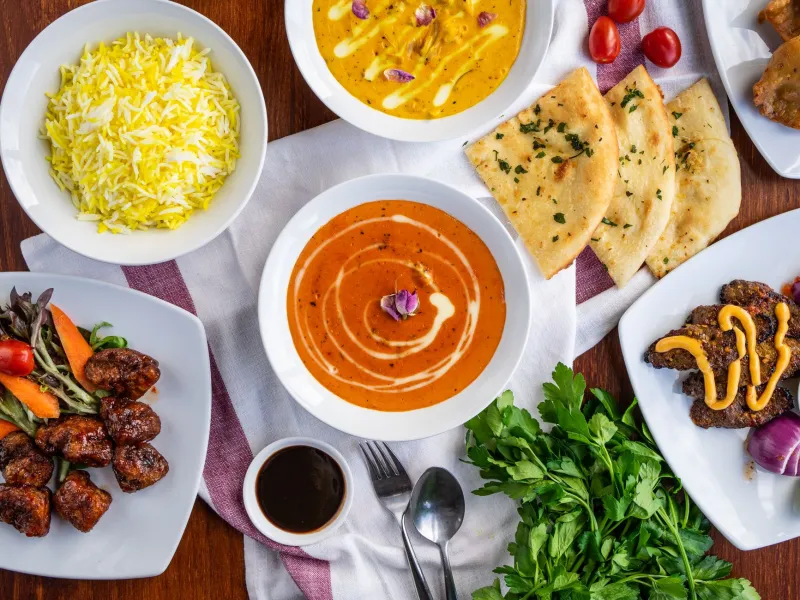
That same spirit found its way into restaurants and catering services like Sitara of India WV. The food isn't just a product — it's an extension of that cultural hospitality, offered to anyone willing to pull up a chair.
What Authentic Cuisine Actually Means
The word "authentic" gets thrown around a lot in food writing, and it can start to feel hollow. But when it comes to Indian cuisine in a state like West Virginia, it carries real weight.
Authentic doesn't mean rigid or exclusionary. It doesn't mean you can't adapt a recipe to local ingredients or serve it in a context that's unfamiliar. What it means is that the food is made with genuine knowledge, genuine care, and genuine respect for where it came from. It means the spices are handled correctly. It means the flavors are layered the way they're supposed to be. It means someone in that kitchen understands what they're making and why it matters.
That matters to the Indian families who rely on these restaurants and catering services as a connection to home. And it matters to West Virginians who are encountering these flavors for the first time — because they deserve to taste the real thing, not a shortcut version.
A Shared Table
West Virginia is a state that knows something about resilience, about holding onto identity in the face of change, about community being the thing that gets you through. Indian immigrants understand all of that too. Maybe that's part of why the fit has worked as well as it has.
The food that Indian families brought to this state isn't a foreign imposition — it's a gift. It's another layer of flavor in a place that was already rich with culinary tradition. And at a table where both pepperoni rolls and paneer tikka are welcome, something genuinely beautiful is happening.
Sitara of India WV exists at the center of that story. Not just as a restaurant or a catering service, but as a place where cultures meet over food and find they have more in common than they ever expected. That's what authentic Indian cuisine in West Virginia looks like. And it tastes even better than it sounds.