Two Kitchens, One Table: The Surprising Flavor Friendship Between Indian and Appalachian Cooking
Nobody warned the ramps.
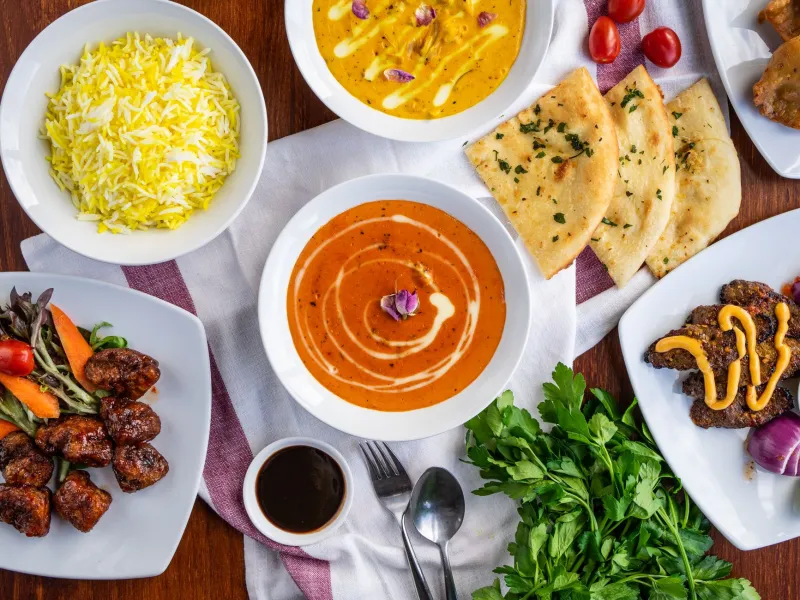
When Indian chefs started settling into West Virginia kitchens, they brought with them a centuries-old toolkit of spices, slow-cooking methods, and a deep reverence for seasonal, locally sourced ingredients. What they found here — wild foraged greens, smoke as a cooking medium, dried beans as a cultural cornerstone — felt surprisingly familiar. And the exchange that followed? Let's just say it's been one of the more exciting things to happen in Appalachian food in a long time.
This isn't a story about fusion for fusion's sake. It's about two food traditions that, on the surface, couldn't look more different, quietly recognizing each other across a kitchen counter.
The Spice Logic They Actually Share
Before we get into the cooking, let's talk about the philosophy. Both Indian and Appalachian cuisines are rooted in resourcefulness. You use what the land gives you. You preserve what you can't use right now. You build deep, layered flavors through time and technique rather than expensive ingredients.
Appalachian cooking leans on smoke, salt, fat, and fermentation. Indian cooking leans on heat, acid, fat, and slow-bloomed spice. The methods are different, but the instinct — coaxing maximum flavor from humble ingredients — is exactly the same.
That shared instinct is where the real conversation starts.
Ramps Meet Their Match
If you've spent any time in West Virginia in the spring, you know ramps are practically a religion. These wild leeks, pungent and fleeting, show up in everything from scrambled eggs to festival menus. For Indian cooks, the first encounter with ramps is often a kind of recognition — they share some of that sharp, allium intensity with asafoetida, a spice used in Indian cooking to add depth and a garlicky funk.
At Sitara of India WV, we've played around with using ramps in place of standard aromatics in certain dal preparations. The result is something that feels genuinely rooted in this place. A red lentil dal finished with a ramp-infused tarka — that sizzled spice oil poured over the top — carries the warmth of India and the wildness of a West Virginia hillside in the same bite.
Local chefs have been going the other direction too. Sautéed ramps with mustard seeds and a little turmeric? Turns out the bitterness of the green and the earthiness of the spice are natural partners. It's the kind of thing that makes you wonder why it took this long.
What Smoke Taught Both Sides
Appalachian cooks have been using smoke as a flavoring agent for generations — smoked meats, smoked beans, even smoked salt have deep roots in the region's food culture. Indian cooking has its own relationship with smoke, particularly in the form of the dhungar technique, where a piece of hot charcoal is placed inside a finished dish with a drizzle of ghee to infuse it with a subtle smokiness.
When these two traditions meet in a West Virginia kitchen, the results are striking. Imagine a slow-cooked lamb dish finished with dhungar, served alongside cornbread made with ghee instead of butter. The smoke runs through both, connecting them in a way that feels intentional even when it happened by accident.
Several local chefs who've collaborated with Indian cooks have noted that learning about dhungar changed how they think about smoke altogether — not just as a byproduct of a cooking method, but as an ingredient in its own right, something to be added with intention and restraint.
Cornbread and the Case for Ghee
Let's talk about cornbread, because this particular crossover deserves its own moment.
Cornbread is as Appalachian as it gets — simple, sturdy, and deeply satisfying. The traditional recipe calls for butter or lard, and there's nothing wrong with that. But swap in ghee, and something interesting happens. Ghee has a higher smoke point than butter, which means a crispier crust. It also carries a faint nuttiness that plays beautifully against the natural sweetness of corn.
We've heard from more than a few West Virginia home cooks who tried this swap after a conversation with an Indian neighbor or a visit to an Indian restaurant and never went back. Ghee cornbread has become one of those quiet little revelations that spreads through a community one cast iron skillet at a time.
Beans Are Beans (Until They're Not)
Both food traditions are serious about beans. Appalachian cooking has its October beans, its soup beans, its leather britches. Indian cooking has its dals, its rajma, its chana masala. In both cases, dried legumes are transformed through long, patient cooking into something deeply nourishing and culturally significant.
The crossover here has been especially natural. Adding a bay leaf and some black cardamom to a pot of soup beans doesn't erase their Appalachian identity — it deepens it. Conversely, finishing a dal with a splash of apple cider vinegar, a nod to the sour notes common in Appalachian cooking, adds a brightness that feels fresh without being out of place.
These are small adjustments, but they speak to a bigger truth: both cuisines are built on a foundation of beans and legumes as comfort food, as sustenance, as something you make when you want people to feel at home.
Learning Goes Both Ways
What makes this culinary exchange genuinely exciting is that neither side is doing the other a favor. This isn't about one cuisine elevating another or one tradition borrowing from a more exotic source. It's a mutual conversation between two food cultures that respect hard work, seasonal ingredients, and the kind of cooking that takes time.
Indian chefs here are learning to slow down and listen to the landscape — to let West Virginia's forests and farms inform what goes in the pot. And Appalachian cooks are discovering that a spice cabinet stocked with cumin, coriander, and fenugreek isn't intimidating; it's just another way of building the depth they've always been after.
A Table Worth Sitting At
The next time you're at Sitara of India WV, look a little closer at the menu. You might notice something that didn't come from a recipe book imported from Delhi or Mumbai. You might taste something that came from a conversation, a farmers market, a foraging walk through the hills of West Virginia.
That's the food we're most excited about. Not Indian food in West Virginia, and not Appalachian food with an Indian twist — but something that belongs to this place, made by people who came from somewhere else and decided to stay.
Pull up a chair. There's plenty to share.